Caring for your seeds: A beginner’s Guide to water, light and nutrients
When you’ve made the intention to grow food from seed, you want to take care of it the best you can. With the right treatment your tiny seed will germinate (the part when the seed first starts sending out root and shoot growth) and grow to its full potential. When it’s food you’re growing, there’s extra incentive too as you get to look forward to eating the results of your effort.
In this blog I’ll go over the basics of seed germination and what elements you need to care for your seeds the best you can.
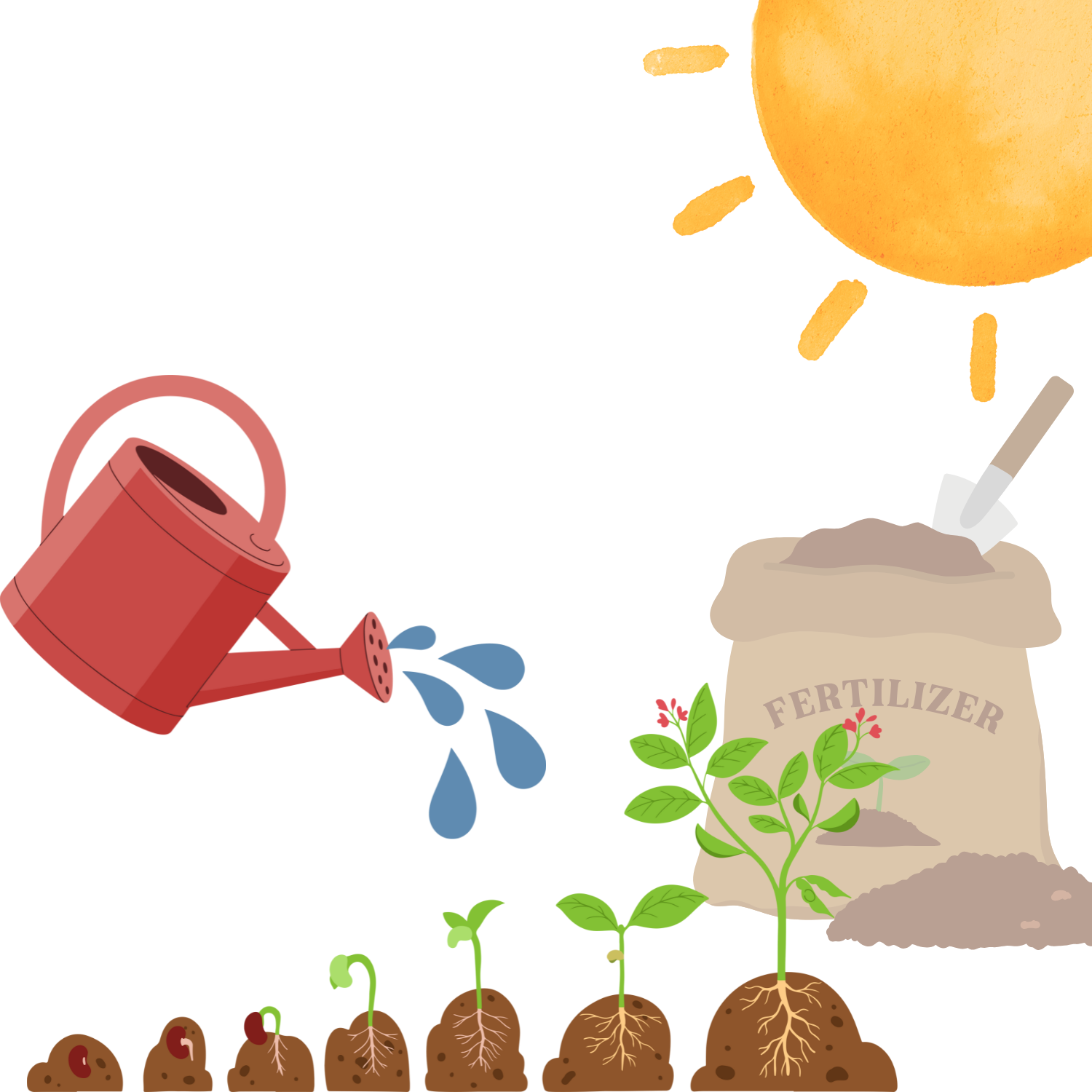
Watering is one of the 3 main plant needs, sunlight and nutrients being the others.
How much water do seeds need?
To start with, your seed will only need a little moisture to trigger the process of germination. That water will soften the outer case of the seed and start the metabolic process of growth. Too much will cause the seed to rot – so compost that is just moistened is great. If you can take a handful of compost and squeeze water out, it’s too wet, leave it to drain a little before sowing your seed in it. This is particularly important for starting seeds indoors.
Once it gets it’s first leaves then the water will start being drawn up through the plant and the water requirement will increase – you’ll notice that the soil starts drying out a little quicker.
Larger watering cans work great for trays of compost if you are sowing outside or in a greenhouse, however if you only have a windowsill to start your plants, then that might be overkill.
You can buy special tops to go onto drinks bottles, however I have managed to use a bottle with the existing top and by punching or drilling into the cap to create small holes it makes a very functional waterer.
How do you know how much light they will need?
Do all seeds need darkness to germinate? Light requirements for seeds can vary, most need to be covered by a thin layer of compost after sowing but a few (like celery) need light to be able to germinate (these are the kind of things shown on seed packets). Once up and out of the soil the plant will need sunlight in order to photosynthesise – this is the chemical reaction within the plant cells that uses the energy of sunlight to create energy for the plant to grow.
It is quite important that it is sunlight and not just ordinary lightbulb light (although you can buy specialist grow lights that contain the right frequency of light to satisfy the plants needs) and you can find that starting seeds off on the windowsill is initially fine, but soon they will be stretching towards the window in search of the right kind of light.
This is why it is important not to start seeds off too soon indoors, if they cannot go outside (or into a greenhouse) as they will stretch upwards and become too tall to sustain their weight and flop over – this is often referred to as becoming leggy.
Nutrient needs of young plants
How do you know when seedlings need feeding? In the very beginning of the process, seeds don’t need any additional nutrients, as the seed contains all nutrients to get going – a little like an egg, that contains everything a bird needs to start the growing process. However once germination has started there is a finite amount of nutrition within the seedling, once this gets used up then it starts needing some from an external source. This is why you can start seeds off on damp tissue paper but leaving them with only water will soon see them failing.
Ordinarily compost or soil is used as the medium by which plants get the nutrients they need, although in a practice called hydroponics nutrients are added to the water in which the plant sits, and no soil is needed.
Multipurpose compost usually has plant food within it’s makeup and garden soil contains it from the organic matter that makes up the components of a soil (there will be a blog all about soil soon) and for some time this will be sufficient for the plants needs. Once you can see that your plant is not as green as it was, perhaps there is a little yellowing, or purple edges to the leaves it’s an indication that more nutrients are needed. At this time you can choose to feed your plant and can choose either natural or chemical fertilisers. Each product will have instructions and ingredients to tell you what it is best used on.
So now you know a few of the factors to consider when starting off in the world of caring for seeds and growing your own food from seed. There are more considerations, like temperature, time of year and daylight hours but I’ve given you the basics so as to not overwhelm. After all there’s always time to learn more.
Subscribe to my newsletter for more growing tips through the year.